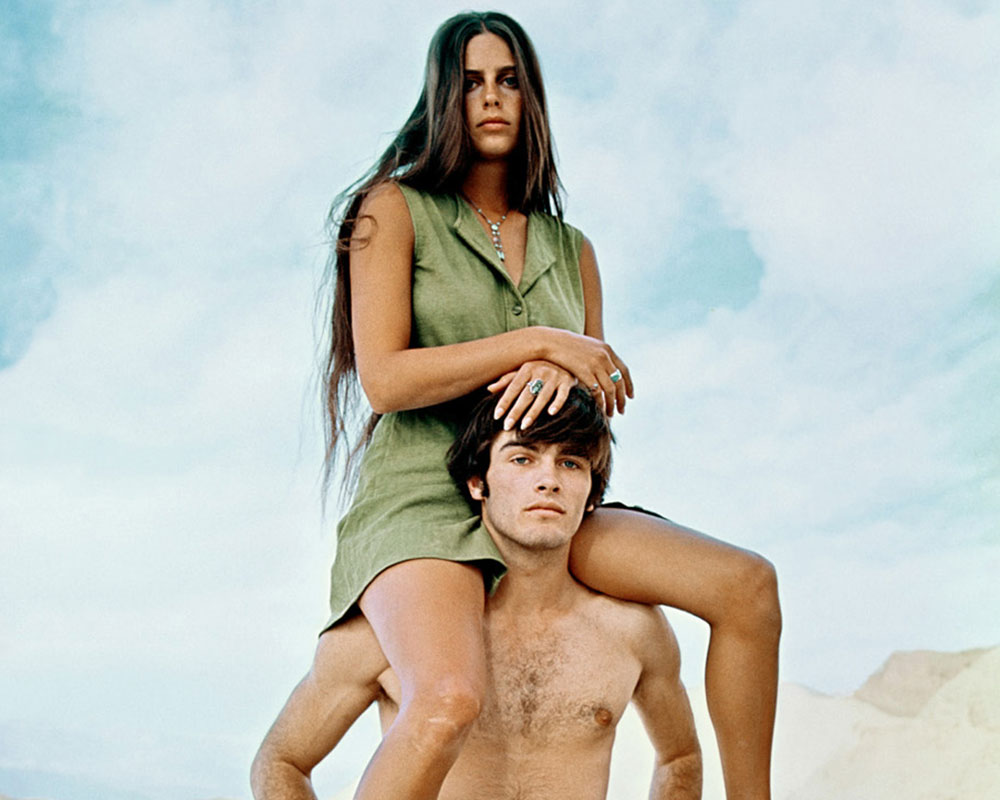
I mainly knew that Zabriskie Point (1970) was a flop at the time of release, a disappointment for Italian art-film director Michelangelo Antonioni after the international success of Blow Up. That, and thanks to a SCTV sketch, I knew that things blew up real good at the end. Palace Cinemas Raine Square were screening Zabriskie Point as part of their Retrospective series this year. Seeing it on the big screen, the film was both quite different to what I expected and also it was what I should have expected from Antonioni. My expectation for a counter-culture hippie freak-out was a little bit disappointed; it’s mainly the last apocalyptic stretch with the Pink Floyd music that it feels like some kind of drugged-out ‘trip’. Antonioni’s approach to cinema from my experience is a slow, observational style, which was met here in the film’s pacing and framing of shots. The opening scenes of activists arguing felt like a documentary and the film includes Black Panthers challenging the white college students in terms of the difference between their respective struggles in the late Sixties era. The inciting incident is the police shooting of an unarmed black man, so the politics sadly feel relevant today – yet the film does spend most of its running time with two young white lovers, repeating some of the representational errors of the time. While they might not be as professional or as charismatic as movie stars (like say Monica Vitti or Jack Nicholson), the two unknown leads are interesting. Mark Frechette does radiate confusion and a troubled state in his eyes; his character runs away from the police after a cop is shot during the campus protests, then he steals a small plane to travel deep into the desert. Daria Halprin is fresh-faced and genuine as the young friendly assistant to a bunch of real estate corporate drones (including the tanned charm of Rod Taylor). The two kids meet at Zabriskie Point, chat, Daria smokes some pot, and they make love in the dust, which leads to the other great sequence of the film with more and more couples wrestling and making love in the dunes (involving the Open Theatre of Joe Chaikin), At times, I was struggling to stay awake through Zabriskie Point at some points due to the slow scenes of planes flying or cars driving, sometimes without songs on the soundtrack. In the end, I felt a bit distant, the feeling of alienation common in Antonioni’s movies, this time shifted to American society and its contrasts of Los Angeles billboarded city streets and empty western deserts, which in the title location almost make the couple and the political mood dwarfed by a prehistoric landscape. The film was less cringey and dated than I expected in comparison to other campus movies of the time like Getting Straight. Yet it also felt elusive and hard to pinpoint for myself. Still, I’m glad I took the trip and saw it on a big screen, enjoying its moments (I didn’t expect the Roy Orbison song at the end), much more than the derided failure the film was taken at the time. Recommended.

