There’s a shot in License To Live (1998), directed by Kiyoshi Kurosawa, where the main character’s father sits in a chair at the foot of his bed. Cast in shadows, the father is telling his son that he’s leaving after their brief reunion, and he resembles a ghost drained of colour. Kurosawa is best known for his horror movies like Cure and Pulse, and this would be an image perfect for that type of uneasiness. And yet, License To Live is a comedy-drama, an existential coming of age movie. The image of the father within the shadows strikes an unnerving chord, but there’s also something sad about the image. The distance and disconnect. Kurosawa’s mastery as a director is strongly felt.
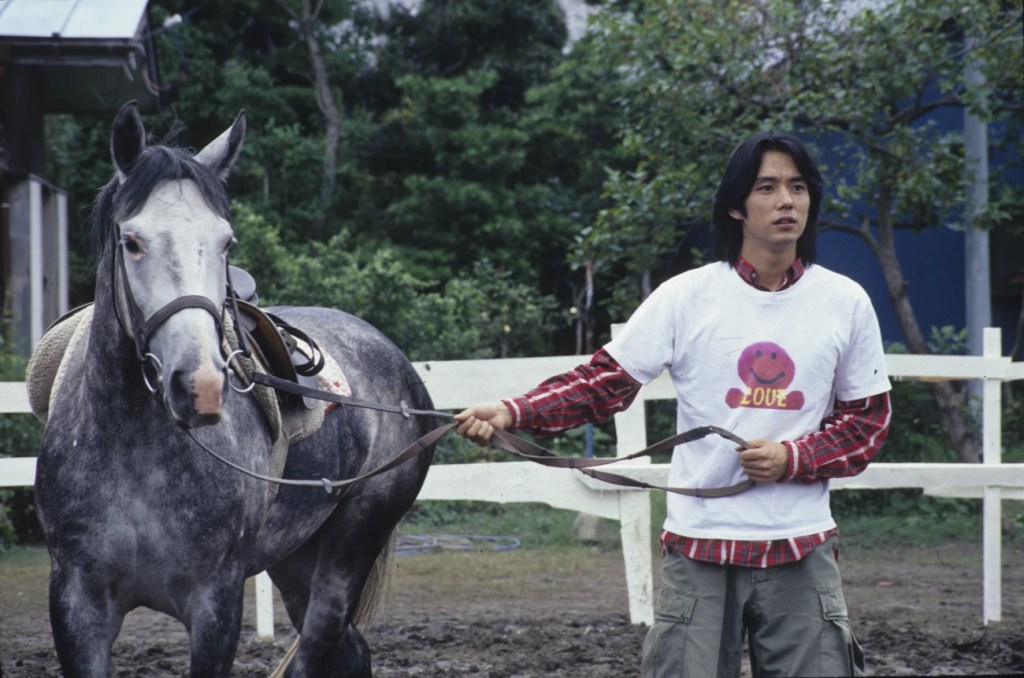
License To Live is intriguingly odd, and I was never completely sure where it was heading as it ambles along. A young man Yoshi (Hidetoshi Nishijima – and no, I did not connect the young actor with being the same guy from Drive My Car) awakes from a coma that he’s been in for ten years. Even though he’s in his early 20s, he suffered an accident has left him as a disaffected teenager acclimatising to a world that has moved on without him. The first visitor to the hospital is the man responsible for his accident, gifting him a substantial amount of money, and to never see one another again. Kurosawa regular Koji Yakusho (from Cure) turns up in his hospital room, reading a newspaper as the kid tries to catch up on what he’s missed out on. Part of experiencing the movie is understanding the connections between characters, and why his family have not rushed to see him alive and awake. Eventually it turns out Yakusho is not actually his father, but is a family friend who runs a fishing farm on the family’s property. For Yoshi, a dream forms of resurrecting a Dude Ranch on a patch of grass, particularly when he crosses paths with a runaway horse.
From darkened interiors to the greyness that is cast over the locations, the most colourful aspect is often the bright t-shirts Yoshi wears throughout. Elegant framing and compositions convey a mood of detachment, often broken by a surreal image or an emotional moment. Some very funny moments alternate with a stark feeling of sadness, disillusionment with capitalism and the family unit not too dissimilar with Kurosawa’s later drama, Tokyo Sonata. Very intriguing to read that Kurosawa was inspired by Sam Peckinpah’s The Ballad of Cable Hogue for the story, and the music often flirts with a Morricone western style sweep. Great to see Show Aikawa from Eyes Of The Spider and Serpent’s Path in a small role, as a guy worried about being a “geek.” Unusual and thoughtful. Available to find on Rarefilmm. Recommended.

 VHS Tracking