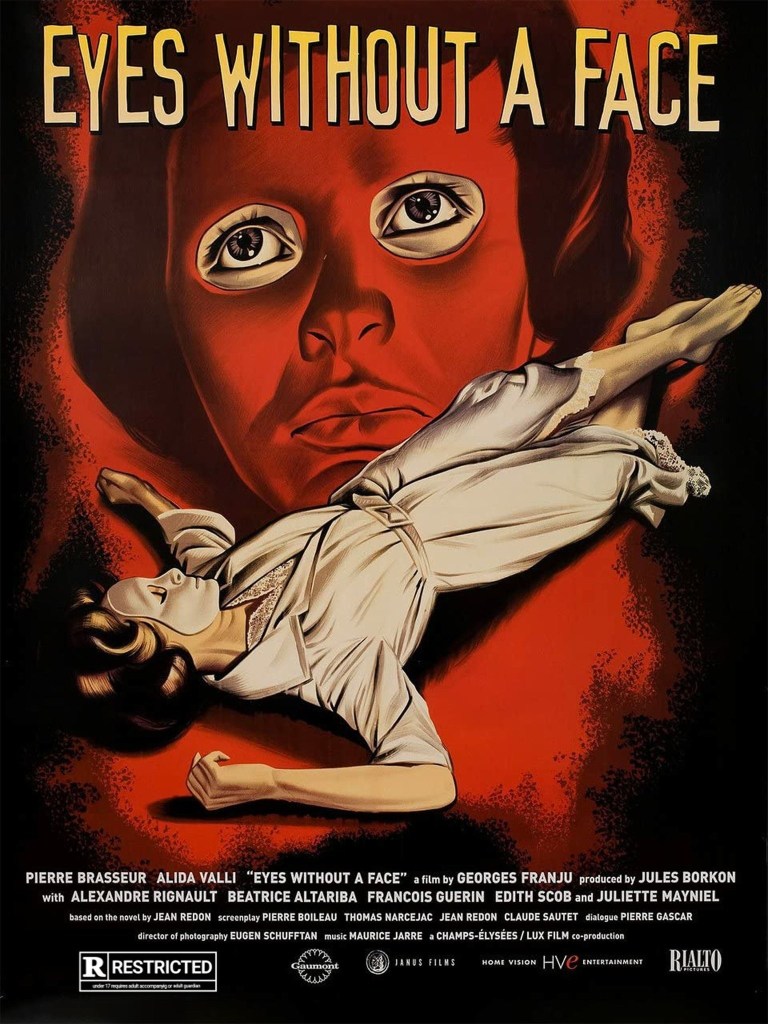
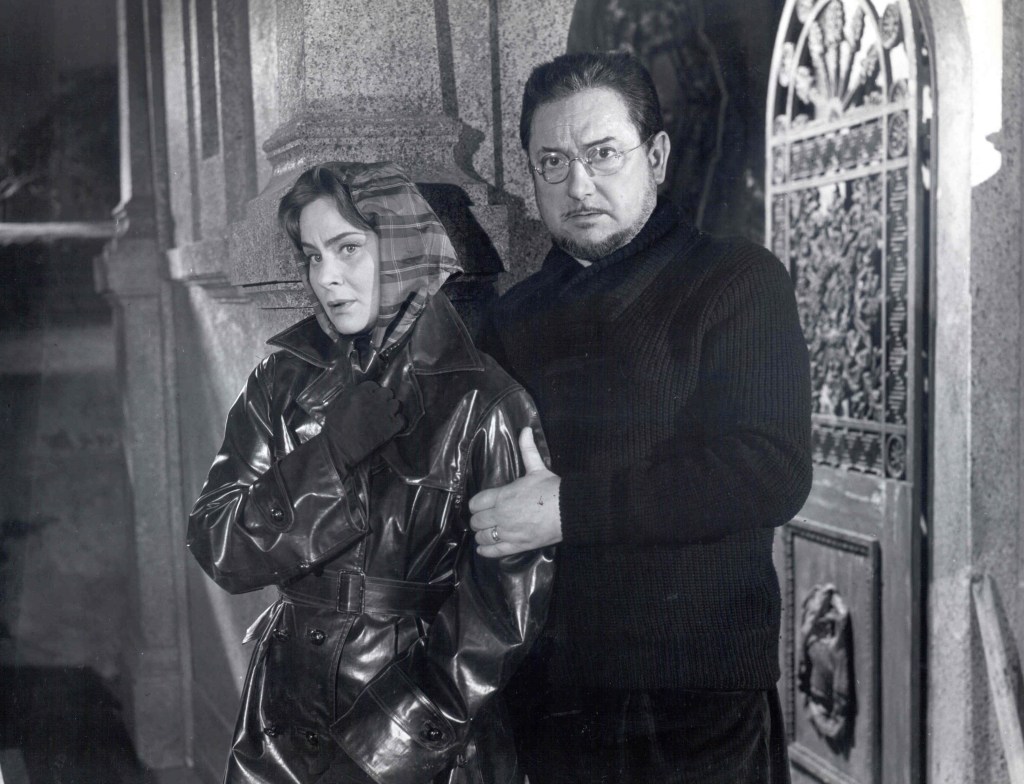
I thought about transition scenes in movies and the greater power that some can have over others. In Eyes Without A Face (1960), a French horror movie about a plastic surgeon (Pierre Brasseur) who kidnaps women to provide a new face for his disfigured daughter (Edith Scob). There is a transitional scene where we see Dr Genessier arrive at his isolated mansion, and we watch him open the garage by himself, and then get back into his car to drive into the garage. Nothing vital happens in this scene, though it helps provide information that there’s no staff on the grounds of this countryside mansion, and acquaints us with the space of the garage (which connects to the hidden surgery as well as a large kennel for abandoned dogs). While watching this scene, I thought, another movie might cut this down or cut it out. Later, after the introduction of Dr. Genessier’s daughter, Christiane, where we never see her face in the framing and editing of the scene, she is told to put on a face-like mask (an iconic look from this movie) by her father’s assistant, Louise (Alida Valli). We have another transitional scene but that has a greater impact when Christiane wanders the hallways of the mansion wearing her mask, as Maurice Jarre’s score plays, and I didn’t want it to end, just to simply observe Christiane move through her home, mask on and wearing her coat, which functions as a prison since she is presumed dead and will only be free when her father’s illegal and criminal face graft is successful. There’s an eerie and melancholy tone to the scene, which feeds into the movie’s impact as strange gothic horror.
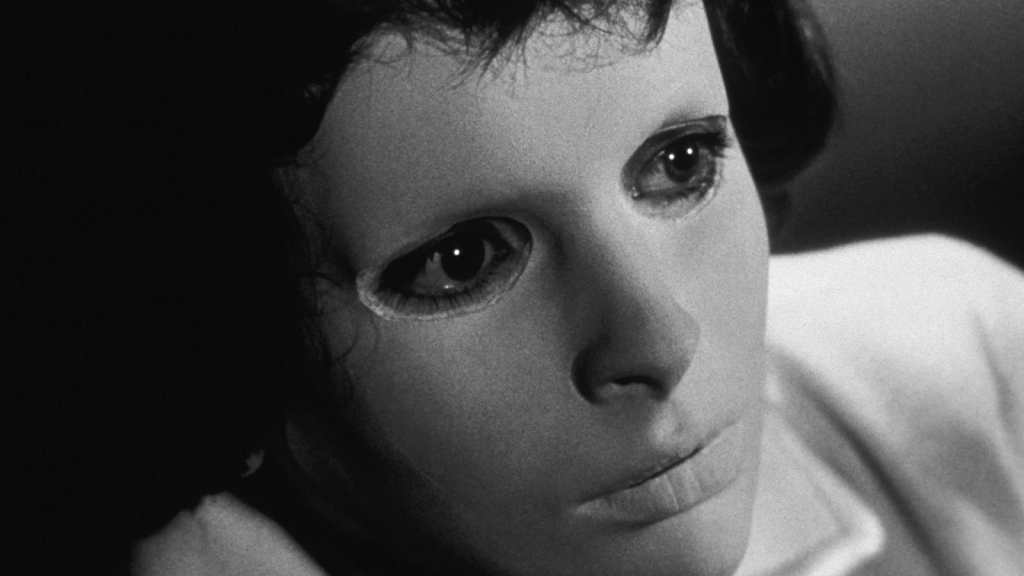
Eyes Without A Face has influenced everything from the title of the Billy Idol pop song to homages like Pedro Almodovar’s The Skin I Live In, and even Edith Scob appearing with a similar mask and coat in Holy Motors. I shouldn’t have been surprised that it is still unnerving, particularly in the face transplant sequence, which remains horrifying even within its older time of horror cinema in France as well as the special effects used. Based on a novel by Jean Redon and directed by Georges Franju, the film is poetic and unsettling, providing enough characterisation to hint at the tragic undercurrent to the doctor’s murderous madness as well as his assistant’s devotion to him (I thought Valli was great too, recognising her from Suspiria).
Remastered version available on Kanopy.

