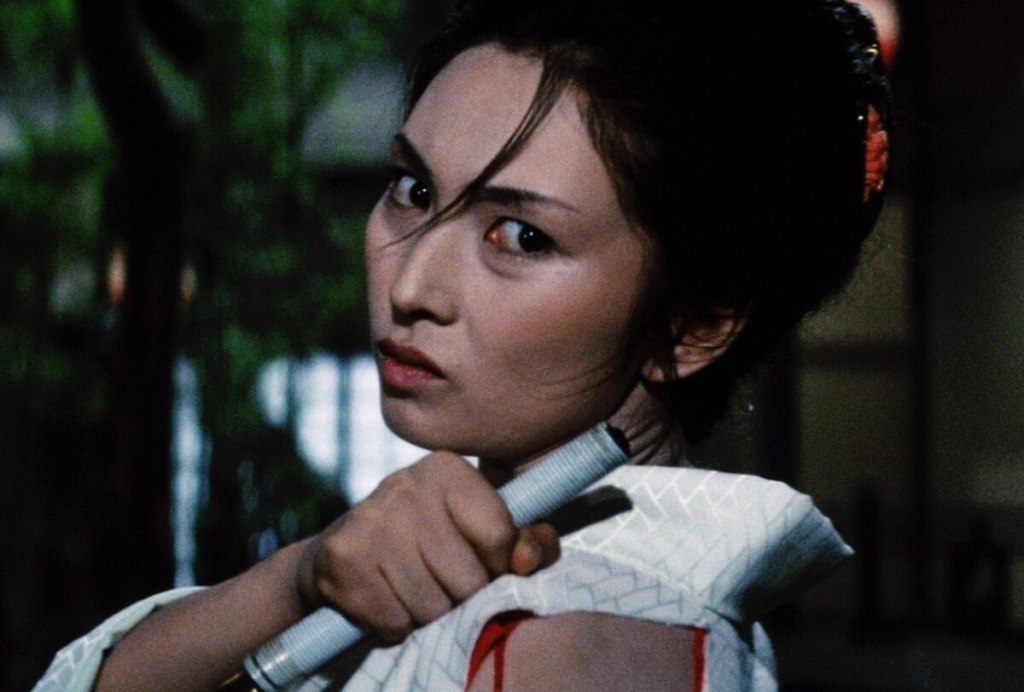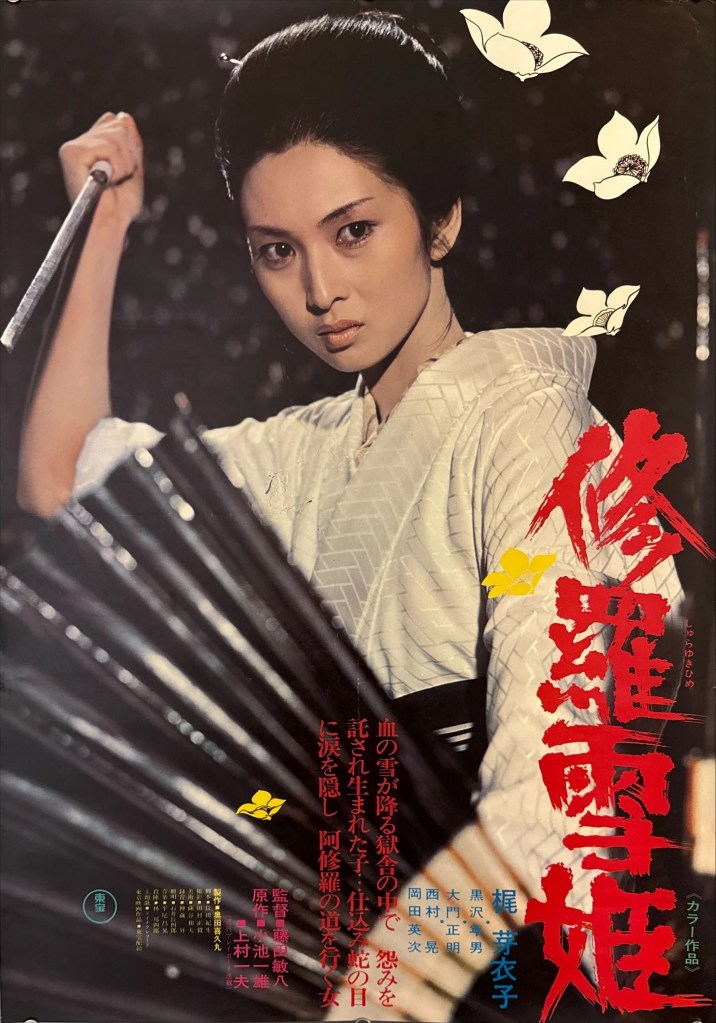
Double edged sword to be a cult movie reference used by Quentin Tarantino; there’ll be fans that will seek out the original texts, though they’ll now always have to be in conversation with them. Particularly a text like Lady Snowblood (1973) that serves as an inspiration for Kill Bill, well, to the degree that an original song was used from it, a character styled from it, the plot and structure taken from it, even a shot of the assailants that the protagonist wants revenge on, a dutch angle framing from a lowered perspective, just like the villains in Kill Bill. (That classic QT conundrum: Homage… or wholesale rip-off?).
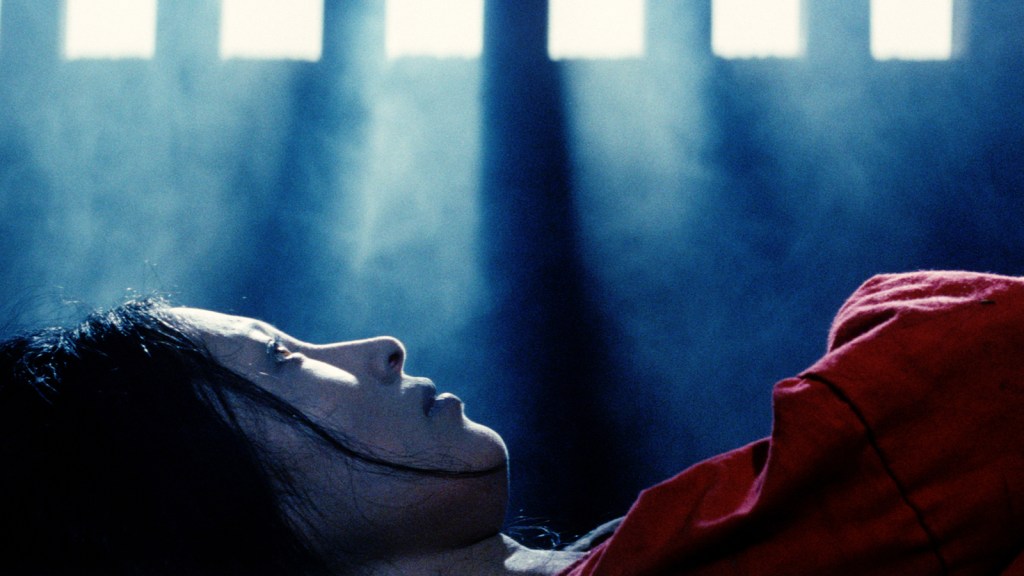
All of this is to say I would love it if Lady Snowblood could exist outside of that, and finally catching up with it, the film exceeds its homages. By being substantially shorter, more inventive stylistically, more layered as a revenge story, connected to aspects of Japanese history and culture, and ultimately, the star power of Meiko Kaji. Between this and the Female Prisoner Scorpion series, Kaji’s insistence on less dialogue and conveying so much with her face, her eyes like laser beams, ensures she is a powerful screen presence.
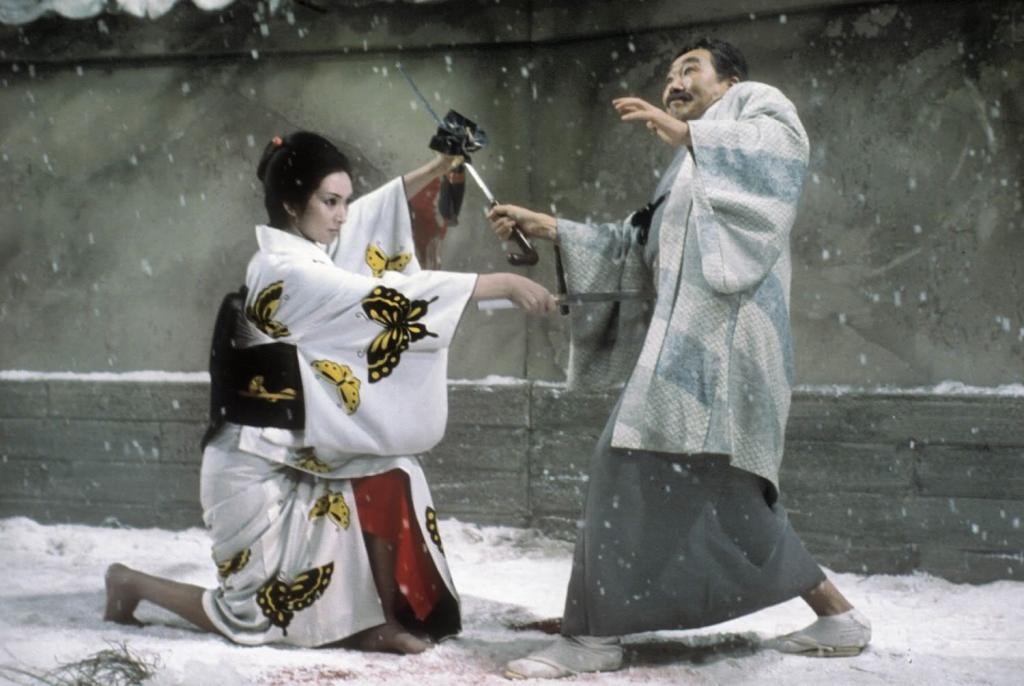
In the late 19th century, a woman named Yuki (Kaji) has been trained from birth to be an instrument of revenge. Her mother was sent to prison for killing one of the four gang members who brutalised her, and killed her husband and son while they were travelling. With her mother dead from childbirth, Yuki is raised by the other prisoners and becomes an assassin, seeking the remaining three criminals responsible for her family’s tragedy. Broken up into chapters and incorporating a few twists within Yuki’s mission, including a connection with a reporter/manga artist (Toshio Kurosawa). Lady Snowblood is beautifully shot and scored, including the theme song performed by Kaji. Based on a manga series and released by Toho. What else can I say? It’s an indomitable classic.