My knowledge of Seijun Suzuki as a director is around his 1960s gangster movies like Youth Of The Beast, Tokyo Drifter and Branded To Kill. All of which are shot through with distinctive black comedy and visual panache that made Suzuki beloved to directors he later inspired like Quentin Tarantino and Jim Jarmusch. While there’s a lot more to Suzuki’s filmography, A Tale Of Sorrow and Sadness (1977) is noteworthy for being the first film he made after being black-listed from directing after Branded To Kill where he was fired from the Nikkatsu Company where he was working. What he became celebrated for – his bizarre visual style and dark humour, rejecting the generic confines of the Nikkatsu house style – were what was held against him by the studio.
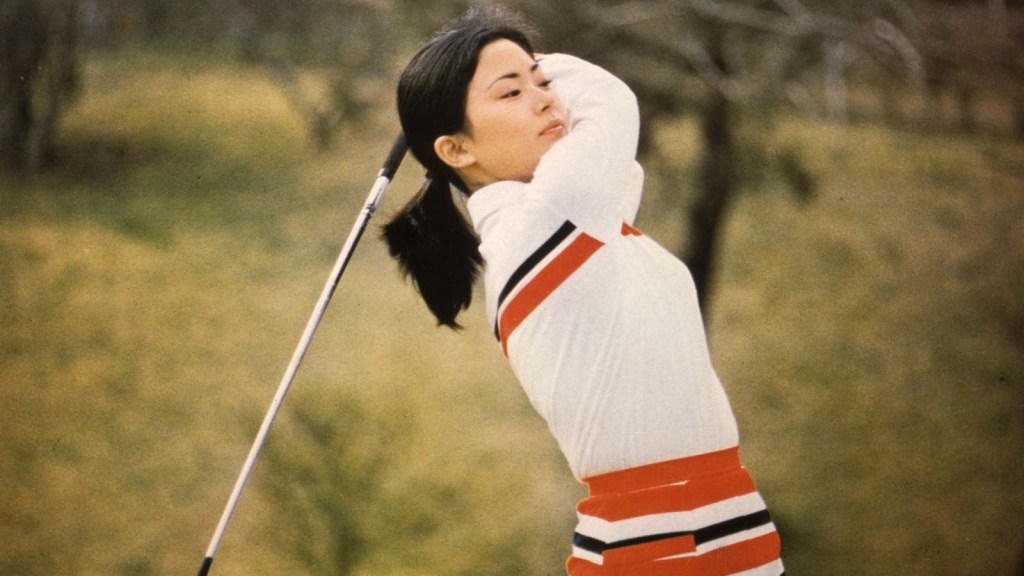
Moving away from the world of the Yakuza and assassins doesn’t necessarily mean a departure from a cut-throat existence. Welcome to the extreme trials and tribulations of Japan’s Next Top Model. An advertising company cannot afford the reigning model superstar, so they decide to create one. As the executive speaks to the fashion photographer and the fashion photographer speaks to a sports writer, we are spectators to the machine that encircles Reiko (Yoko Shiraki), an aspiring model and golfer. As the money flows through the chain of men as an investment, Reiko is trained hard to be a major competitor at the next golf tournament, simultaneously as she is photographed and styled as a rising star.
A chief pleasure of watching A Tale Of Sorrow And Sadness is the unpredictable nature of the storytelling, enhanced by the eye-catching fashions, the bright colours, the artistic framing and at times avant garde editing. As the movie continues, it’s not enough to witness the misogyny and manipulation of the men surrounding Reiko, as she becomes commodified as an object, particularly her arrogant and drunken boyfriend Miyake (Yoshio Harada) who initiates mind games to control her, there are also the psychotic corners of fandom, characterised in Reiko’s neighbour Kayo Senbou (Kyoko Enami). Even within this portrait of celebrity construction and destruction, offering a stinging satire towards commercialism and consumerism, there are layers to these characters, small moments that allow them to go beyond archetypes, particularly in the striking imagery employed. Not to mention the sense of fashion and style across the board.
Darkness and despair within the magazine gloss and imagery. Available to find a copy on Rarefilmm; also a great Blu-ray release from Radiance. Recommended.

 VHS Tracking