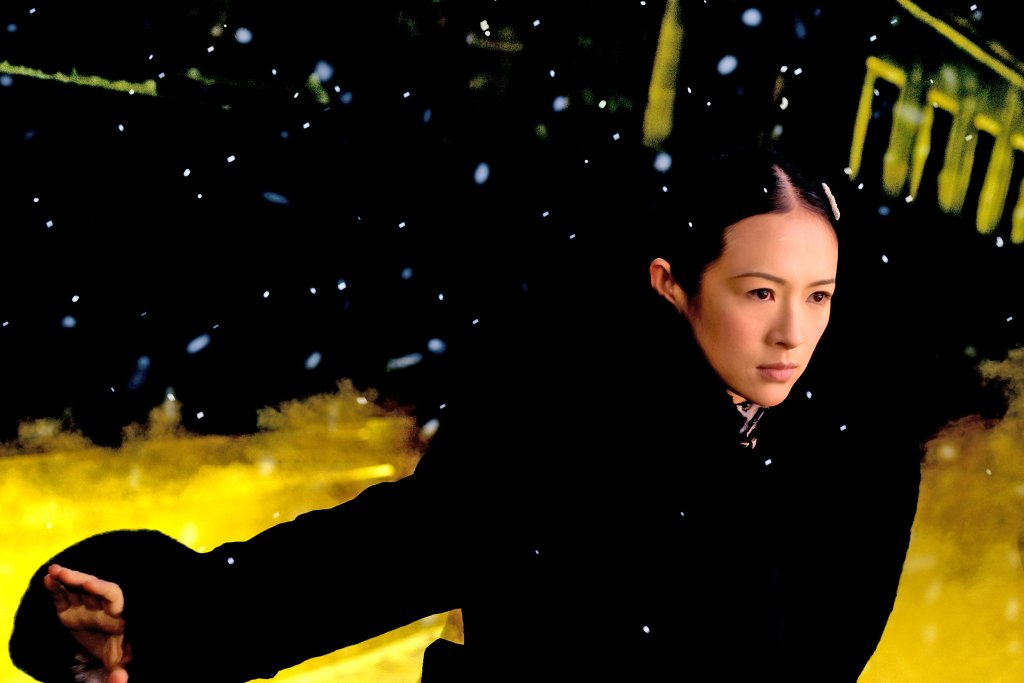
I can’t remember much of a cinema release for Wong Kar-wai’s The Grandmaster (2013); it felt like its mixed reception resulted in an underwhelming reputation. Unexpectedly a martial arts movie for fans of Wong Kar-wai’s arthouse melodramas, it might have been too much of an arthouse melodrama for fans of martial arts movies. I was reluctant to watch it if only because I heard the longer Hong Kong cut was better than the international release, which Kar-wai worked on the edit for (though no doubt also affected by its release by the Weinsteins); on-screen text is used for character names and interstitial cards with historical context spell out everything for an overseas audience unfamiliar with the story represented here. Kar-wai was apparently planning this film for a long time, a biopic of Ip Man, the renown martial arts teacher who instructed Bruce Lee, and by the time The Grandmaster was released, there were already two of the Donnie Yen Ip Man movies out in the world (a series which I also love – the sequence where Donnie fights the school of training soldiers in the first one, incredible!). With Tony Leung as Ip Man, there’s a different vibe, his innate charisma and class as a screen presence doing a lot of the heavy lifting as the character is mainly communicated in narration over montage interspersed with fight scenes. The Grandmaster looks beautiful, with Phillippe Le Sourd’e cinematography giving a rich, green and amber glow to interiors, street scenes often having an element (rain, snow) to convey stark visual contrasts. As a melancholy biopic broken up with operatic fight sequences, I really got into The Grandmaster; it has an elegiac, mythic tone like a David Lean or Sergio Leone movie as the march of history leaves Ip Man and the martial artists’ quest for someone to unite the different fighting forms left behind by the Japanese invasion. When the Tai Chi Master lights Ip Man’s cigarette, truly a beautiful scene. In keeping with Wong Kar-wai’s auteur interests, the film gives greater weight to themes of time, memory and yearning, but it also has fantastic action sequences choreographed by Yeun Woo-ping. Zhang Ziyi is also a stand-out as Gong Er, daughter of the outgoing master of the North who has an unrequited romance with Ip Man (who is married) and seeks revenge on those responsible for her father’s death (the train station fight is an all-timer). While it still feels a bit clunky with the characterisation and plotting, I still was impressed by the international cut. Shows up on SBS On Demand for short periods but available to rent on iTunes. Look forward to seeing the longer Hong Kong cut at some point. Recommended.

 VHS Tracking