I always loved that in their Criterion Closet YouTube video, Lucrecia Martel selected Carnival Of Souls and said something to the effect of, that it was enough to make one film if it was as great as that. Only after I had watched Martel’s film, The Headless Woman (2008), did I see its connection to Souls – both involve a road accident and a woman drifting through their life afterwards. While in Souls, it’s an eerie horror story that becomes poetically existential in form and style. Here, with Headless Woman, it’s also existential but also firmly rooted in class and social privilege, how the people around the main character – those also in her upper-class lifestyle and those working class employed as servants – all keep her functional, even when she doesn’t know who she is or what is going on.
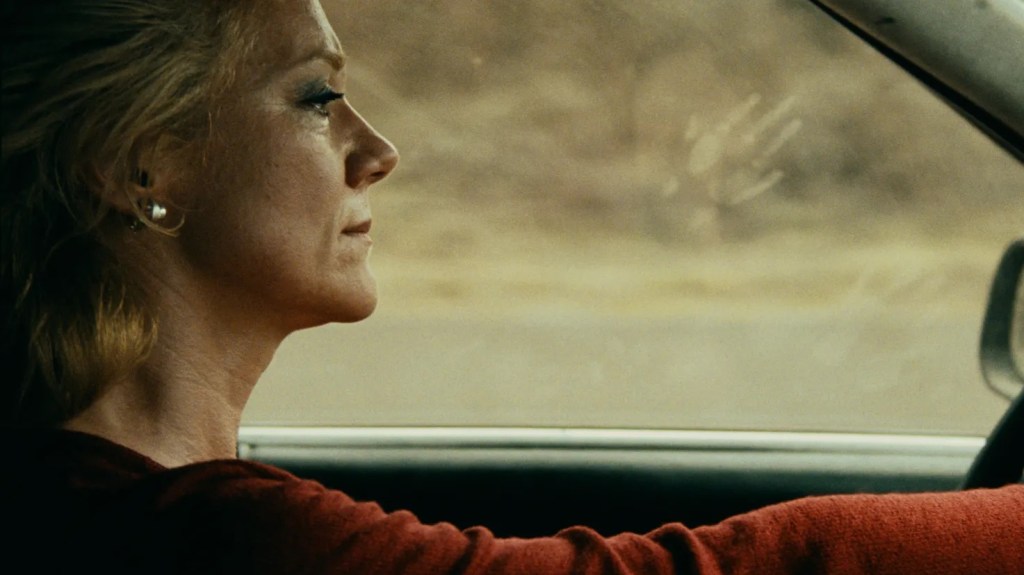
The Headless Woman stars Maria Onetto as Vero, a woman of means in Argentina who is driving along a dusty road next to an emptied canal. Distracted momentarily, Vero hits something, possibly a dog, and keeps driving on. However, the opening scene of the movie shows us three boys playing in the canal. We have no visual confirmation and there’s an ambiguity that runs throughout – what did Vero hit? What’s very clear is the traumatic impact it has on Vero; she tells herself it was probably a dog, and yet, she becomes a shell of herself, a ghost wandering through a life she cannot recognise. Onetto is excellent, not saying much throughout her scenes, and often obliquely framed; the camera is either focused on the back of her head, or her hair, or positions her body obscured in the frame. The title becomes visual as we see this woman “headless”, cut off by something in the foreground or dissected by objects in front of her. Onetto makes us feel somewhat empathetic to her confusion and growing guilt, even as it inspects her from a detached distance, a symptom under the microscope of the inequality and privilege in the society depicted.
The cinematography (shot by Bárbara Álvarez) and sound design are amazing, placing the audience in the lead character’s head space while allowing us to observe them. We’re carried along by the progression of images and mise en scene, and the palatable unease and strangeness that the film develops. A moody, at times darkly funny, and haunting drama that has the tension of a thriller within the context of class-conscious socio-political commentary. Available to stream on the Criterion Channel. Recommended.

 VHS Tracking