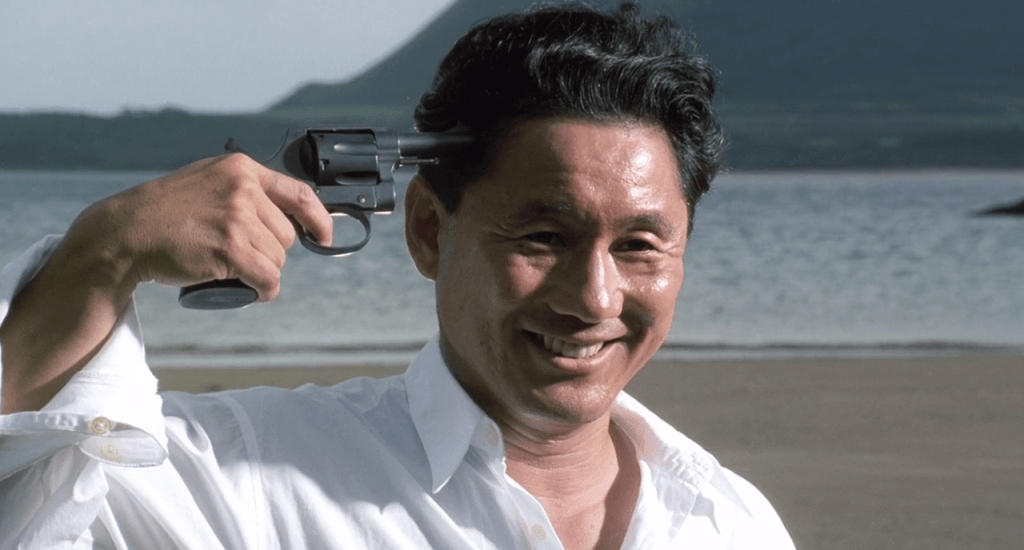
When violence occurs in Sonatine (1993), directed, written and starring Takeshi Kitano, it is sudden and shocking. Yet there’s also a blankness to it – gangsters fire their guns without emotion and react impassively to the blood. For a crime movie about the Yakuza, the lifestyle is not presented with any excitement or flashiness. Kitano as a star presence sets the deadpan tone, and his character Murakawa is a bored gangster thinking of retirement in one form or another. Even with the hard, casual violence, there’s such grace and comic delight to the film, particularly when its characters, a crew of Yakuza gangsters (led by Kitano’s character) on assignment in Okinawa, have to hide out when a turf war becomes too dangerous. In a house between the beach and some hills, the gangsters start retreating to playing games, pranks on each other, and bonding in a way they haven’t before. They, like the film, have taken a vacation from the criminal life and the film’s genre. Yet it’s shot through with a sense of resignation that it won’t last, particularly communicated in the iconic dream image of Kitano’s character smiling as he shoots himself in the head, and the crew inevitably have to return to the city to sort out the gang war. I’ve seen Hana-Bi, which I’d like to revisit, and Zatoichi, but am not across all of Kitano’s work. Yet it was great to finally see Sonatine, which many have said is his best, and I thought it was confronting, funny, beautiful and sad, and had such a singular balance between chaos and stasis, brutality and sentimentality. Great score by Joe Hisaishi. Recommended.

 VHS Tracking