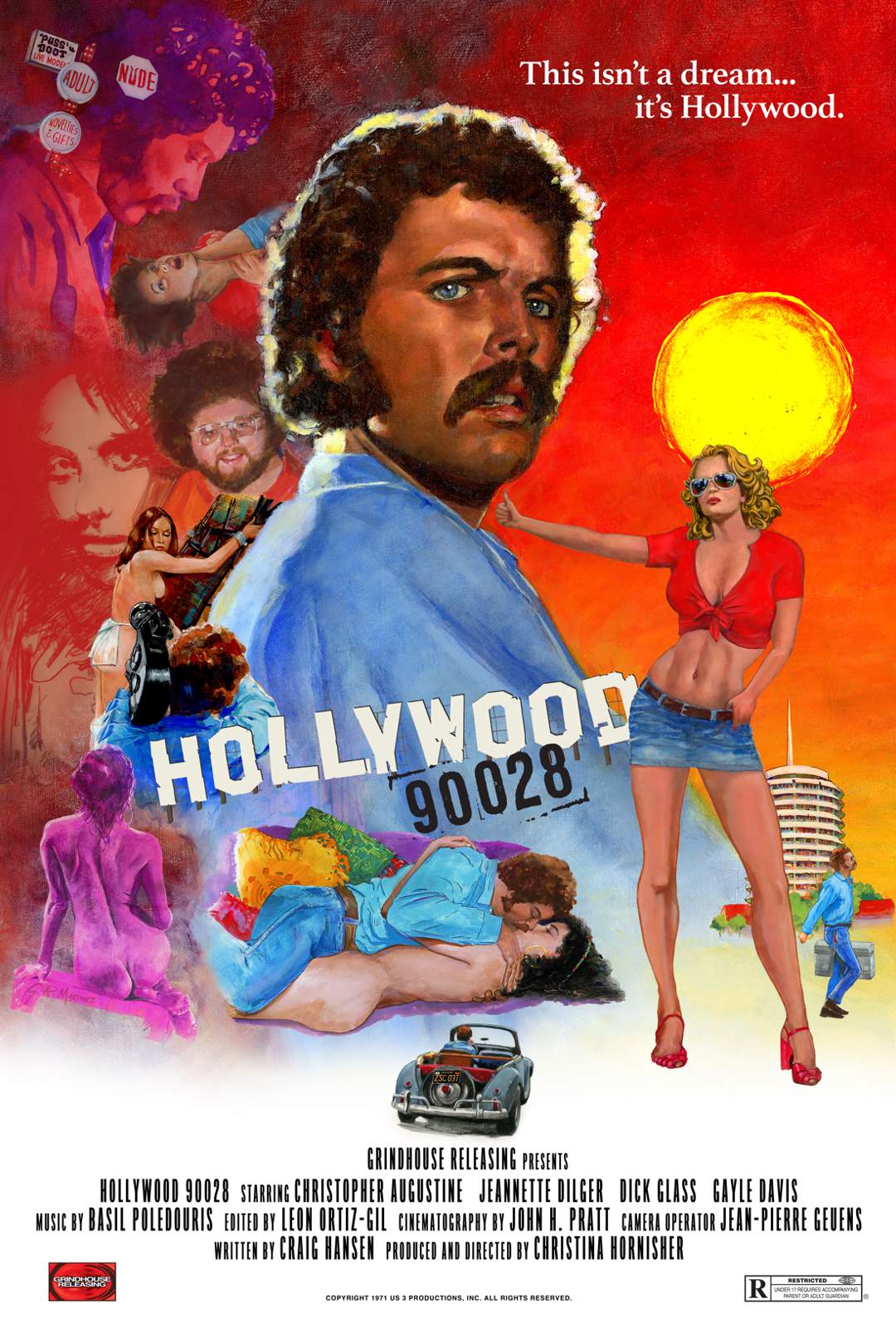
I only watched Jaques Demy’s Model Shop when Quentin Tarantino programmed it as part of a retrospective that was shown on SBS, as it was a clear influence on Once Upon A Time In Hollywood as a ‘Driving around LA’ movie. In Once Upon A Time, it’s about a cool guy driving around L.A. while the spectre of murderers and serial killers lingers on the fringes in the form of the Manson Family. In the rediscovered independent film, Hollywood 90028 (1973), directed and written by Christina Hornisher, this is all collapsed. The guy driving around L.A., a moustached cinematographer and photographer, Mark (Christine Augistine) – wearing sunglasses, slumming away shooting pornography and picking up girls – is the killer. In the opening sequence, he meets a girl in a late night diner, they go back to her place, and he eventually strangles her.

Hornisher’s film follows Mark on his rounds, someone who moved to LA to work in the film business, and has been struggling to get legitimate work, filming cheap nudie flicks for a sleazy guy named Jobal. It’s not a slasher movie, and works more like a character study, with poetic reveries. Often sequences take us on a tour of houses marked for demolition, or characters wandering through city spaces as the sun goes down, conversations heard in narration (recorded after filming). Mark meets a young model, Michele (Jeannette Dilger) on one of the porno shoots, and they begin hanging out. She lives in the hills at a house owned by a touring musician. Their connection is borne out of their frustration as transplants to a city that offers promise but has disappointed them.
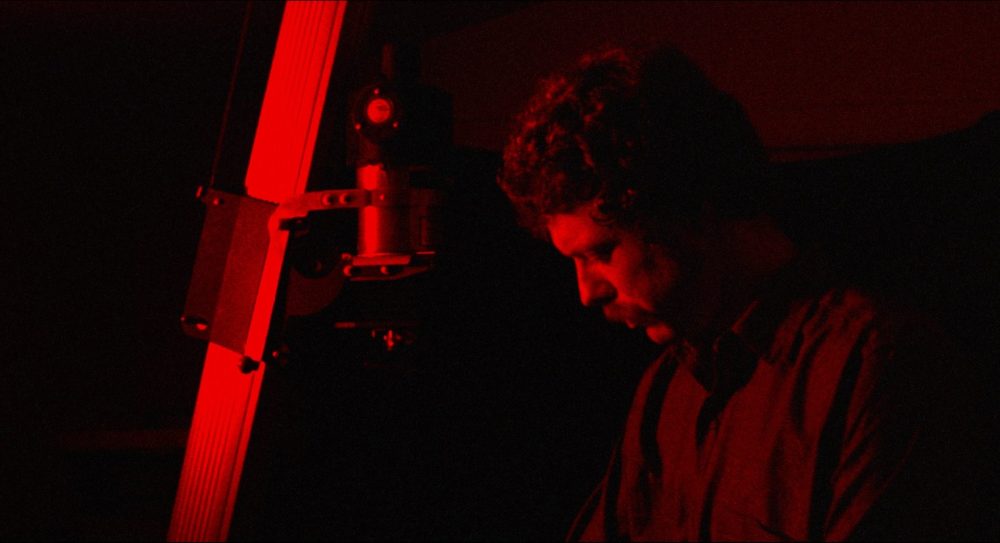
Hollywood 90028 made me think of true crime stories, Model Shop and Once Upon A Time In Hollywood, and is an artful psychological thriller with a good lead performance from Augistine, who carries himself like a regular, hip guy in his open top convertible, but there’s something blank behind the eyes. An early score from Basil Poledouris who I knew mostly from bombastic pieces for action movies like Robocop and The Hunt For Red October, and to hear a more plaintive piano based score, which adds to the introspective and haunted vibe of this sun-soaked hang-out movie. Grindhouse Releasing led the charge in digging up a forgotten movie and restoring it for new audiences. A character study and a snapshot of a time and place, though the broken dreams and broken people continue to haunt the Hollywood hills and the Hollywood sign.

 VHS Tracking