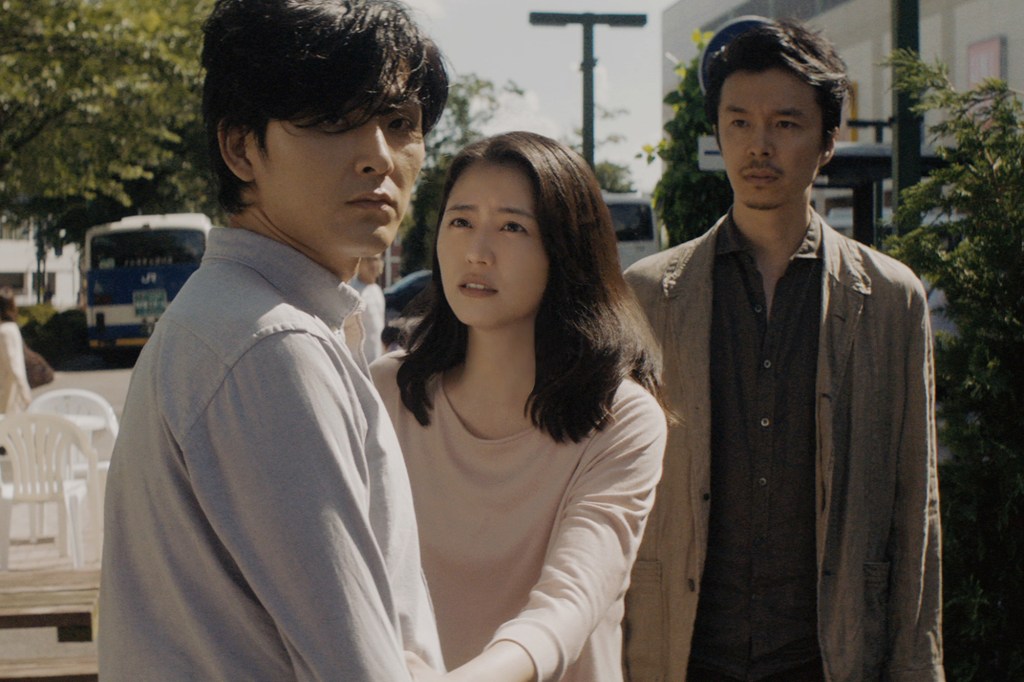
Yusuke Hayashi’s score for Before We Vanish (2017) – directed by Kiyoshi Kurosawa – brings to mind memories of Amblin Entertainment productions. There’s something about the orchestral sweep, its eerie tension and yet a little twinkle-in-the-eye feeling. The sound of an alien invasion movie, and with Kurosawa’s genius for creating tension and unease through blocking, framing and editing, it’s intriguing how brightly lit and open Before We Vanish is. Kurosawa’s use of shadows – even just the way a character standing next to a van with the sunshine blocked and casting him a little bit in shade – still creates a strange feeling.
In Japan, three aliens inhabit the bodies of humans beginning their mission to gain information and organise communication with their superiors. Kurosawa adapts from a stage play and downplays any ‘creature feature’ special effects for actors who play the awkwardness and confusion of hosts in a new home. An intriguing wrinkle to the Invasion of the Body Snatchers creeping infestation is that the aliens need to understand humans by taking “concepts” – ideas such as ‘ownership’, ‘family’ and ‘work.’ There’s a linguistic game here with the result, humans either turned into vegetables or freed from ideas that have kept them prisoner in society.
Two narrative strands unfold, and eventually intertwine. A journalist, Sakurai (Hiroki Hasegawa) comes across one alien, Amano (Mahiro Takasugi) and then another Akira (Yuri Tsunematsu) and decides to follow them, possibly getting a story out of it. A wife, Narumi (Masami Nagasawa) in a strained marriage finds her husband, Shinji (Ryuhei Matsuda) even more of a stranger, and yet more receptive and building themselves to be a better version of their host. Government forces take the form of a health official, and the sci-fi trappings find a recurring theme for Kurosawa of contagion and viruses, starting small and developing slowly as people begin to be affected by what’s happening. The surprise is that, even within the building apocalypse that people familiar with Kurosawa’s work might recognise, there is a sentimental and unexpectedly sweet streak that develops and also infects the film’s narrative drive.
Streamed on SBS On Demand; also on Kanopy. Recommended.

 VHS Tracking