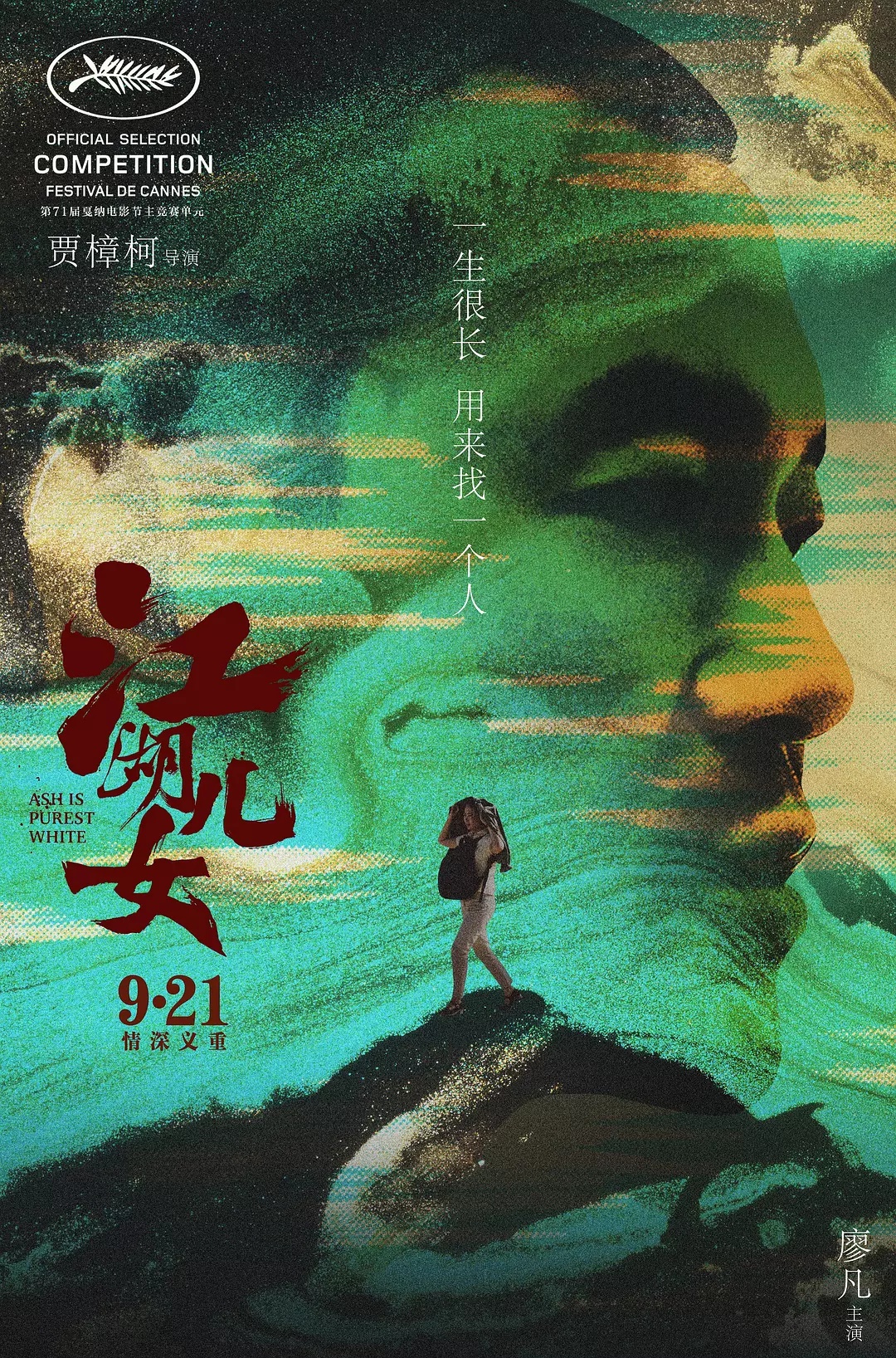
Wanting to explore more of Chinese director Jia Zhangke’s filmography, Ash Is Purest White (2018) intrigued me because of how it appeared. In the poster and key images I’ve seen, the film is marketed as a romantic crime movie. And yet, that’s only one third of the story. While I was watching Ash Is Purest White, I thought about why aren’t there more films that take this novelistic approach: observing a character over 15 years, and checking in at three different intervals, documenting the ongoing changes in society alongside the shifting fortunes of the character. When the main character, Zhao Qiao (Zhao Tao), is released from prison after a period of five years, I thought: who is this person? They were previously defined as being the girlfriend to a crime boss Guo Bin (Liao Fan), and as a confident operator within the circles of gamblers, financiers and underlings. Without that, or their relationships that define who we knew them as, who are they? Zhao eventually demonstrates her guile and tenacity, even when dealt a losing hand, particularly since the act that sent her to jail was for Guo Bin, an act of love that is not repaid.
While I might not know all the specific details about the areas that Zhangke was filming in, or the changing state of China across these years, the characters are situated in relation to the landscape they’re in, and how broader economic forces might impact them. From the mining area that Zhao and Bin are a criminal presence and known in the community, to the Hubei province where the Three Gorges Dam is in process, the film is observational and detailed. Tao and Fan give excellent performances, particularly Tao who charts the changes in her character over time and the sense of disappointment and endurance across the years. Particularly after reading an interview with Zhangke about what Tao adds to her character in performance, such as the use of a plastic water bottle as an extension of herself in the second act. Fan I knew from the Diao Yinan films The Wild Goose Lake and Black Coal Thin Ice, so was surprised to learn Yinan has a small acting part in this film. I don’t know if I was emotionally moved by Ash Is Purest White, but I was taken in by the central character’s journey, Tao’s performance and the scope of the movie as it chronicles a person and society in tandem. I’m looking forward to seeing more of Zhangke and Tao’s collaborations in the new year. Recommended.

 VHS Tracking