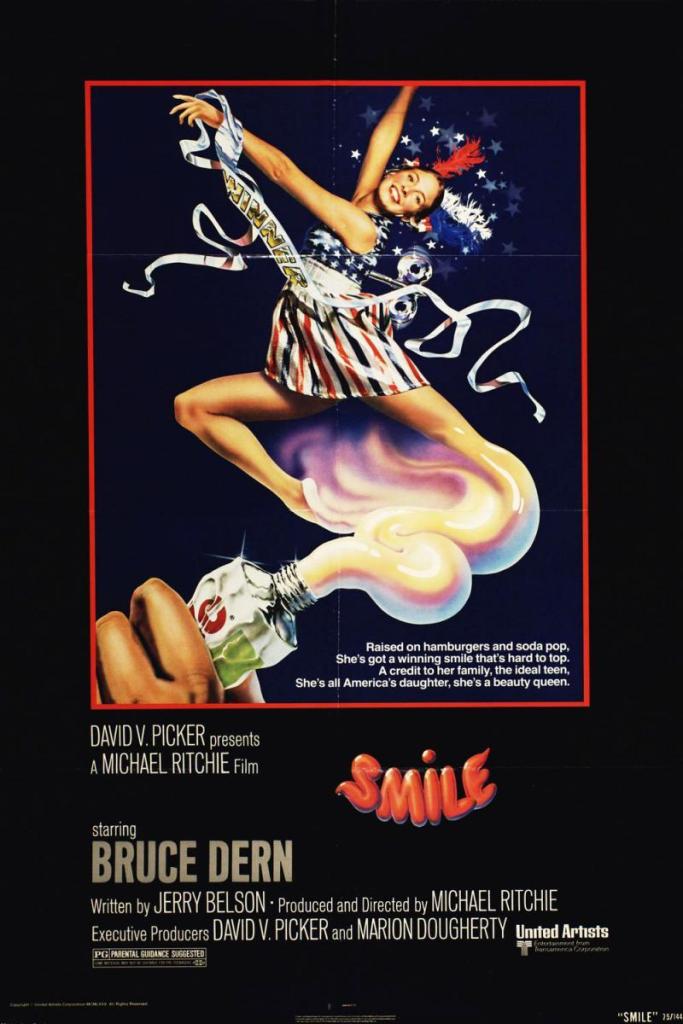
Smile (1975) is a forgotten satire about a beauty pageant in Santa Rosa, small town California, representative of the heartland. Written by Jerry Belson and directed by Michael Ritchie, there’s plenty of gags and one liners about the Young American Miss Pageant, which this movie observes, from the preparations to talent show routines to the announcement of the winners. Yet the movie isn’t targeting the high school girl contestants, its satirical focus is more about the community around them, the organisers and committee members. Ritchie as a director had already made the political satire The Candidate at this point, and there’s a similar semi-documentary style; it’s not a broad lampoon, but grounded and taking in all the buzz and chaos. The main theme is the relentless positivity and overconfidence – “smile even though your heart is breaking”, Nat King Cole sings over the opening credits – that is characterised as a very American quality, the bright and cheery commercials and consumerism papering over anything potentially difficult or depressing. Bruce Dern was often typecast as a troubled or disturbed guy in movies from this era, so its fun to see him as a toothy booster, a car salesman named Bob Friendlander who is also one of the pageant judges. He and the chief chaperone and organiser Brenda DiCarlo (Barbara Fenton from Get Smart) are introduced as enthusiastic supporters of the event, wide eyed focus on this most important time of year. Other sub-plots emerge such as Bob’s son, Little Bob and his friends trying to spy on the contestants, the drunken janitor worried about the plumbing, and the committee chairman fretting over the money being spent. When one character is built up, a visiting big-time choreographer, I was worried that this was going to be a dated stereotype; instead, the choreographer is played by an actual choreographer, Michael Kidd, who is hilariously disgruntled and curt. Amongst the cast of contestants are future stars (Melanie Griffiths) and favourites from the era (Colleen Camp), yet the two who emerge as the most interesting are Annette O’Toole and Joan Prather who are roommates, and take the roles of practiced operator and inexperienced naivety respectively. The film is definitely in the wheelhouse of a Robert Altman film but has a lighter touch; it’s not as blunt or sarcastic, and is warmer to its characters even as they are ridiculed. Conrad Hall’s beautiful cinematography looks great on the remastered Blu-ray release from Fun City Editions. Recommended.

 VHS Tracking