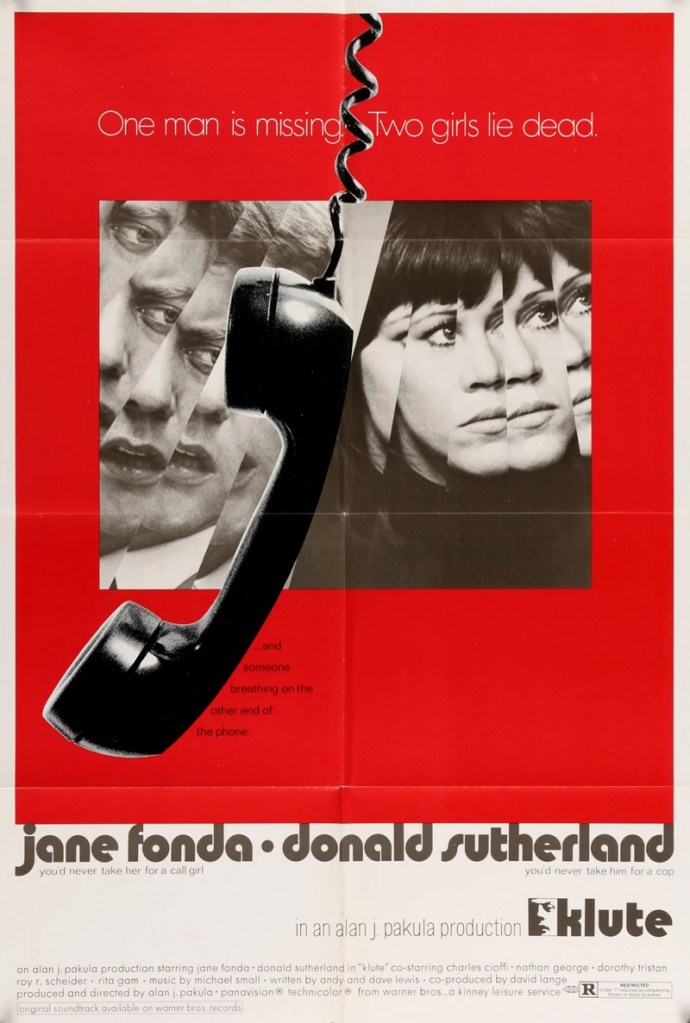
I watched Klute (1971) a long time ago and simply remembered it as a good 70s thriller. One Saturday night, dusting off the DVD I own, which held up well visually considering the darkness and shadows of Gordon Willis’ artful cinematography, this re-watch opened my eyes: Klute is a masterpiece!
This isn’t exactly news as it has always been highly revered, and was both a critical and commercial success, winning Jane Fonda the Academy Award for her performance as sex worker Bree Daniels. Yet the film is named after Donald Sutherland’s character, a detective from Pennsylvania who is hired to find a long time friend and corporate executive, Tom Gruneman. The only lead are obscene letters found in Tom’s desk that were addressed to Bree. Roger Ebert argued in his review at the time of the film’s release that the movie shouldn’t have been called Klute and indeed given the name of Fonda’s character, Bree, as she steals the movie with her iconic performance and the layered character study the movie provides her.
We see Bree at work, the confidence and charm she displays in performance, even as she also hustles for modelling gigs and acting roles. We hear Bree confide her inner desires, dissatisfactions and fears to a therapist. We watch Bree walk through the streets of New York city. The framing of Willis’ images and the use of shadows in interiors and particularly at night, alongside Michael Small’s eerie, atmospheric score, creates a palpable big city paranoia, a theme that would run through director Alan J. Pakula’s later films like The Parallax View and All The President’s Men. There are so many strong, memorable, artistic shots throughout Klute and it all works to heighten tension and establish character.
Though Sutherland’s character might seem square and boring, only small external clashes or tensions as he descends further into the sleazy terrain of New York, I think there’s something underrated about his performance. The way Sutherland remains internalised, quiet and still projects a good counter balance to Fonda’s talkative, strong persona. In comparison to other 1970s’ detectives and cops, Klute remains an oddity – neither reactionary or hip, brutal or wise-cracking – and is presented in the given intrigue that Sutherland’s off-beat acting persona presents. Alongside Small’s melancholic, romantic ‘Love Theme’ on the score and the naturalistic acting moments between Fonda and Sutherland (the fruit buying scene really hit hard on me this time around), I fully bought their romance – and even though it might include conversative consequences to what was a provocative character in Bree (i.e. that she needs to be protected and taken care of), it doesn’t feel fully forced or that moralistic an ending.
Great supporting performances from Roy Scheider as a seedy pimp and Charles Cioffi is completely unnerving in his role as the executive who has hired Klute. Great sense of location shoots throughout New York and set designs with regards to Bree’s apartment. A masterful neo-noir thriller that feels very influential in its adult approach to character, sex and urban paranoia. Available to rent on iTunes. Recommended.

 VHS Tracking