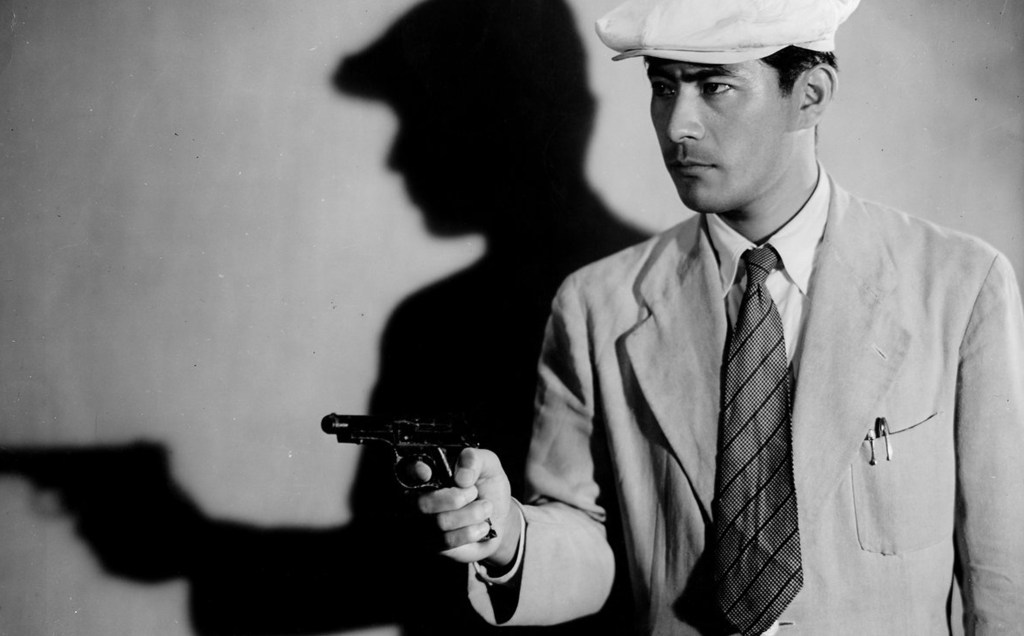
In Akira Kurosawa’s Stray Dog (1949; Nora inu), a young Toshiro Mifune plays a rookie detective named Murakami who feels shame and twists himself in knots over losing his newly acquired Colt pistol to a pick-pocket on a tram. This is both a film noir and a police procedural, which seems to have influences on every successive buddy cop movie or detective procedural, Stray Dog is also a document of post-war Japan, and works like a sociological portrait in the same way that the heist in Dog Day Afternoon was used as a frame to depict New York as a city (a comparison also coming from the fact that Stray Dog takes place over a heat wave that continually has its characters sweating in frustration). I really liked that the film diverts its attention from the central plot to take in ‘stray’ moments like a pick pocket looking at the night sky or a woman practicing piano in the distance during the tense climax. Stray Dog is alive with details, particularly the impact of the war on people and the rise of crime and capitalism in the generational shift. The film evolves as well once Mifune gives up his fruitless solo pursuit and partners with the wisened veteran detective Sato (Takashi Shimura, from Seven Samurai and Ikiru) as they hope to catch the thief who is using the gun to commit robbery and other crimes. Stray Dog was so good, filled with tense set pieces (the baseball game stakeout, the hotel phone call sequence, etc) and engaging characters (the growing partnership between Mifune and Shimura, the character of the dancer played by Keiko Awaji who knows the thief, etc), developing growing suspense with its plot while also providing introspection and observation of the different spaces across the city. Recommended.

 VHS Tracking